
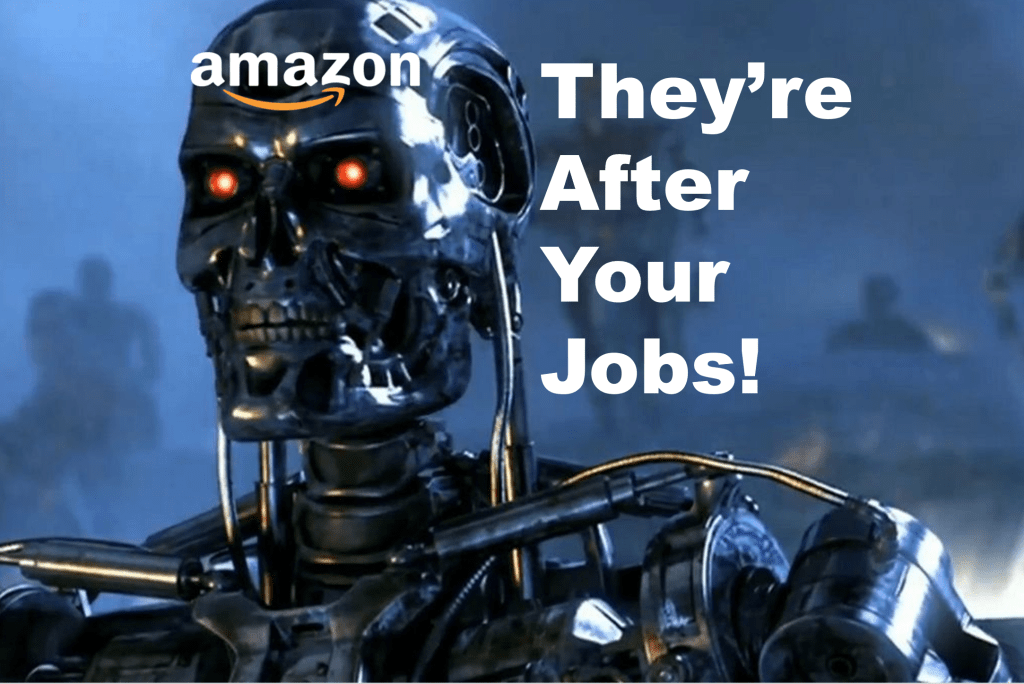
Okay, so not ‘The Terminator’ exactly, but The Terminator’s real-world cousin, automation. When people talk about automation it tends to spark ideas of either socialist utopias like ‘Star Trek’ where the need for work has been removed completely and humanity works towards its own betterment, or apocalyptic dystopias, where automation has run rampant, widened inequality yet further, or as in ‘The Terminator’, taken over the world. In the coming years and decades, automation like algorithms, robotics and machine learning (AI) are likely to bring enormous benefits to productivity and the economy across all sectors. However, this will come at the cost of replacing or radically changing many existing jobs.
The Office for National Statistics estimates that 1.5 million people in the UK are at high risk of losing their jobs to automation, whilst PwC estimates that 30% of jobs are at risk of automation by the mid 2030’s. Not all those who have their jobs replaced will become unemployed as many new jobs will be created from the time that automation frees up, but PwC estimates 45% of jobs displaced will be from manual or routine roles, which are generally low skilled or are skills that have become redundant. This means that if they don’t retrain, these people are likely to be continually pushed out of employment by automation for the rest of their working lives. It’s worth noting these changes to the way we work won’t happen all at once, but more gradually. Whilst workers are still cheaper than the cost of robotics and algorithms, they will still be needed to fill roles in industry.
So how does Labour’s National Education Service proposal come into this? Surely automation will bring about a socialist paradise many on the Left dream of, by removing menial tasks, so that we can work not for necessity, but for the betterment of each-other?
Labour hopes their proposal for a National Education Service will mirror the sweeping transformation in healthcare brought about by the National Health Service 75 years ago, by improving fairness in education and making it free for all. On the face of it, Labour’s proposals seem to do just that, including more guaranteed early life hours, better teacher training, no University tuition fees and, crucially for us, free further education for life.
Labour’s answer to reskilling would seem to be the National Education Service, with Labour promising free further education (FE) for all with the funding taken from a current govt. scheme they would cancel to create new technical colleges? However, there is a large omission and that is recognition of who is likely to need free FE and reskilling. Likely, low skilled and low payed workers pushed out of jobs by automation, many of whom will be supporting families and will need their living costs subsidised so that they can reskill. With as many as 1.5 million people a year needing reskilling in the 2030’s, equivalent to the current university going population, Labour will need to account for at least another £8Bn to support these families, to avoid them being left behind.
If Labour don’t want to raise additional taxes to support this, here a few ways they can avoid the automation shaped pitfalls awaiting their National Education Service, but it could require compromise on some of their other stances. In part greater investment in apprenticeships already promised by the NES will help fill the gap in support for those needing reskilling as they can rely on a steady wage throughout their training. For the rest though, Labour will be wanting large employers to take responsibility for their employees and could regulate to make sure corporations finance in full or in part the training of their employees replaced by automation. Labour may have to offer tax subsidies or ease up on their plans to raise corporation tax, to incentivise private sector assistance, especially in the likely scenario the next Labour government is in a post Brexit Britain, where the cost of replacing workers may start to look cheaper elsewhere for these large companies.
The last solution, which could raise more questions how it would be funded, is to support a Universal Basic Income (UBI). The idea of a UBI has been around for a while, trialled in multiple countries, and much lauded by Silicon Valley plutocrats, who believe it could be solution to job losses from automation, by taxing those who benefit from automation. Andrew Yang, millionaire and democratic US presidential candidate has even proposed a $1000 a month ‘Freedom Dividend’ to help struggling Americans deal with the shocks automation will bring to the job market (2-3 million supermarket jobs in America are at risk from if Amazon Go goes nationwide). However, UBI has also been widely criticised, with fears it could be used to accelerate the rollout of automation across all industries and widen inequality further.
A combination of all of these will likely solve the hole in logic or oversight of Labour’s National Education Service. What is apparent is that Labour needs to be more open about the future challenges the UK may face and how their policies will tackle them. Being straight talking, proactive and open to compromise with policy making is what will restore public trust in any political party. What Labour is doing right is putting equality of opportunity in education at the heart of their message, and it’s a stance any party claiming to support equality should emulate.
Whilst ‘The Terminator’ might not be taking our jobs tomorrow, we should be vigilant of the large corporations and those in power who would abuse automation and new technology for their own benefits. Automation, much like the internet, will change the way we work forever. The question is, will we use it for the benefit of society, or allow it to enrich those who already have power?
Thank you for reading and if you’ve enjoyed this, please check out my other blog posts and consider following me on WordPress and Twitter (@Tom_kaneblogs) for updates. I also post my blogs on Medium if you would prefer to read them there.
Further reading: If you’ve read this far and are interested to learn more about the direction automation may go in the future, there’s no better place to look than the original Skynet-like dystopian AI in Phillip K Dick’s 1953 novel ‘Vulcan’s Hammer’. A short science-fiction novel by the acclaimed writer set in a world governed by a benevolent AI, VULCAN. It is a great read and surprisingly prescient given it was written in 1953. You will be surprised by how much Hollywood has ripped it off.
 TK Blogs