
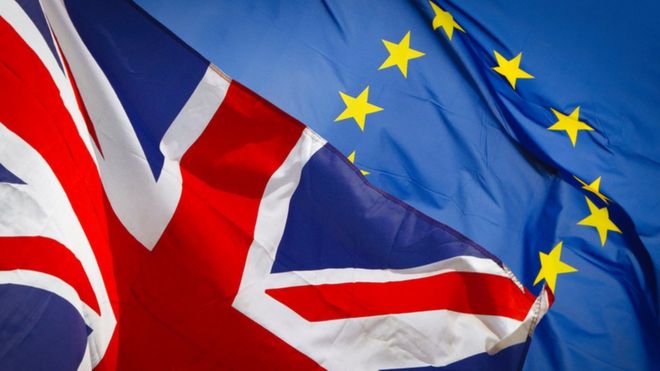
The UK looks increasingly likely to be leaving the EU without a deal on 31st October.
As preventative steps the UK should resume its no-deal Brexit preparations from the 31 March and stockpile food and essential medical supplies to ensure safe running of the NHS and reduce shocks to the price of food from high EU agriculture tariffs. The government should also encourage business to stockpile any essential supply chain components produced in the EU in order to fulfil orders after the 31st October. The EU should do likewise although they are likely to be less damaged by supply chain failures.
In the short term, the EU and the UK could make a political declaration to agree to zero or minimal custom checks between the EU and the UK on the proviso that the UK would keep to or improve on current EU regulations for goods. This may be unlikely, but it would be an effective, if fragile, mitigation step to help keep an open border on the island of Ireland and protect EU and UK SME’s, dependant on each other’s trade. The UK Govt. could increase borrowing in order to provide financial assistance to SME’s vital to the UK Industrial Strategy, who could otherwise survive the medium term aftermath of Brexit but not the initial shock of a no deal. The UK may also have to provide working capital loans support to larger business, like airlines, to stop them from failing.
Within a few months of Brexit it is likely that the UK may have a general election and the EU would have a clearer picture with respect to British intentions and trade negotiations. There is a chance at this point that a pro remain coalition govt, in the UK may ask to re-join the EU and the EU should put the UK through the application process as other nations. However, it may be beneficial to forego this if there is unilateral agreement from EU council and restore the UK’s former status in order to mitigate any further damage to be caused by Brexit. More likely in this scenario a pro Brexit govt. would win the general election, at which point the UK and the EU should engage in trade talks, with clearly defined demands and compromises stated from the start. This may include any ‘divorce bill’, money the UK owes the EU due to its prior commitments, and access to EU projects and institutions (Galileo, Europol, European Atomic Energy Community, ITER etc.). The focus from both sides should be on completing the negotiations quickly and maintaining regulatory alignment between the EU and the UK on most issues. This could either lead to the UK joining EFTA, having a free-trade agreement with preferential terms with regards to regulatory freedom or a similar deal to the EU-Japan Economic Partnership Agreement, where most goods are tariff free.
Regulatory alignment becomes an issue in the longer term as business weighs up the risks of continued investment in the UK. Many of these businesses will have set up in the UK because of its ease of access to the European market and regulatory divergence would harm their business prospects in Europe and the UK. The UK needs to make a rapid decision on the prioritisation of regulatory alignment vs trade with EU or US, as the US wants to push their regulations on to the UK in a trade deal that could cover pharmaceuticals, aviation, agricultural products and everything else on the table. European regulatory alignment would likely ease the process of an EU deal and the minds of business in the UK.
In order to keep business in the UK the govt. could consider lowering corporation tax further to 12.5% as Jeremy Hunt has suggested, making the UK the most attractive place to do business in Europe from a tax perspective. However, this would mean, assuming corporation tax raised in 2020 is equivalent to 2016-2017 levels of £57Bn (not a given post-Brexit), that the UK would lose £17Bn of tax from the budget. This would make any lowering of corporation tax a gamble that may not pay off and will certainly lead to greater borrowing to cover this loss to the budget as well as Brexit shocks. In time this could bring a lower credit rating for the UK and higher interest rates for business. All of this would cause greater disruption in the EU as Britain would become a low-regulation economic competitor on its border, a Singapore on Thames.
The EU and UK should also consider looking elsewhere for trade in the long run. Both will look to Africa, with the African Union recently agreeing a free trade area worth $3.4trillion. Whilst the EU should look to making a deal between the two trade blocks, the UK may wish to target its global and Commonwealth allies to form more bespoke deals. The UK could even look to form its own trading block within the Commonwealth of Nations, although it’s unlikely India with its protectionist trade policy would look to join at first. Ideally the groundwork for some UK trade deals has already been put in place with Australia and New Zealand by the Department of International Trade, but many more nations will be needed to make up for the UK’s trade deficit.
It’s worth noting one thing that could scupper all preparations to resume trade negotiations between the UK and EU and lessen the impact of Brexit, is Boris Johnson’s insistence that the UK will not pay £39Bn owed in obligations to the EU. The EU have said clearly that no further negotiations can take place after Brexit until the £39Bn is paid.
Thank you for reading my blog! This one is a bit more free-form than my previous blog as I just wanted to get my thoughts out there, before the political landscape changes once again! Looking forward to finishing off all the other posts I have drafted in the last month, but have been to busy to finish. N.B. This was written in application for a Policy Internship role earlier this month
 TK Blogs