
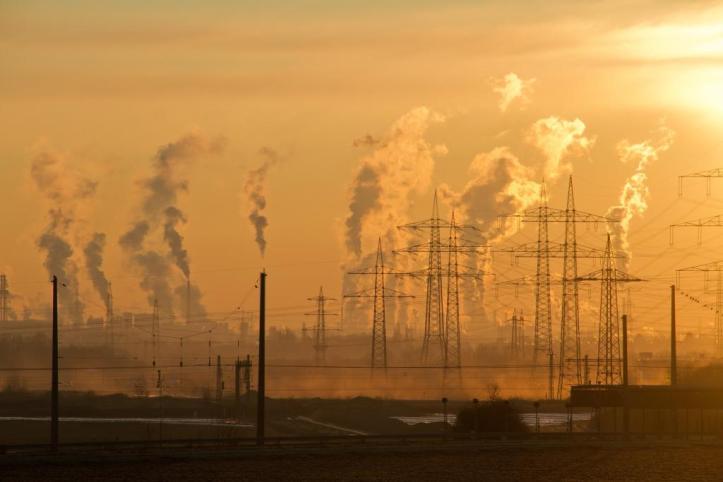
We are living in a time where human activity is causing the fastest rate of global warming and extinction of species for millennia if not millions of years. Even if we stopped producing greenhouse gases (GHG’s) overnight, many effects of global warming would still be locked in, including glacial/sea ice melting, stronger storms, longer droughts and more frequent famines. The question is, where we are still contributing to rising global temperature, what can we do to mitigate the damage of the climate crisis?
1. Resource Extraction
Resource extraction and processing causes 80% of all biodiversity loss is responsible for 53% of the worlds carbon emissions. This includes everything from fossil fuels to metals, sand (for concrete) and biomass (lumber and agriculture).
Many developing nations want to extract resources to profit from them as developed nations have in the past century. However, this drive to extract resources to bolster economic growth will further increase the damage done. Instead we need to separate the association of materials from economic growth and replace it with a new idea of cyclical economies which focus on recycling materials already in circulation and processing them to the same quality. To implement this, governments could follow Norway’s model for recycling plastics, by incentivising consumers and companies to recycle and, by going even further than Norway, to taxing companies who produce more than 10% virgin products (from freshly extracted resources). Some resources will still need to be extracted but this should be done with the sustainability of the environment in mind and with regulations to ensure the protection of citizens from pollution and restoration of habitats.
2. Diversity of energy supply
The simple answer to mitigating climate change is to stop burning fossil fuels, which produce CO2 and other GHG’s, as quickly as possible in order to keep to Paris Climate Agreement targets of 1.5C warming. Currently 77.5% of the global energy mix is from fossil fuels and demand for electricity is increasing by 2.3% per year. To replace fossil fuels there will need to be an exponential growth in renewable energy production and energy storage capacity in order to supply quick and reliable energy on demand. To precipitate this growth, we could use the existing 400BnUSD of global fossil fuel subsidies to invest in development of renewable energy infrastructure and to help developing economies to leapfrog the need for fossil fuels. One way to make sure this succeeds is to aim for diversity of supply by investing in many different forms of energy production in order to increase the resilience of our supply against weather, which may disrupt wind and solar energy. Among these, tidal, hydroelectric, geothermal and energy storage capacity may be best placed to fill in the gaps with wind and solar, but also perhaps generation four nuclear reactors, which produce less radioactive waste and some of which have no risk of causing nuclear meltdowns (molten salt reactors).
3. Fusion for the future?
Another technology that could benefit from the 400BnUSD of fossil fuel subsidies is fusion energy. Fusion has seemed to be perpetually ’30 years away’ but now the largest fusion project, ITER, which has a total budget of €13Bn provided by the EU and five of the other richest countries in the world, is expected to be operational in 2025. However, ITER’s electricity producing successor DEMO, won’t be ready until at least the mid 2030’s at which point it may be too late to mitigate the worst effects of climate change. There are other smaller scale state projects including those in China, US and the UK as well as private ventures like Lockheed-Martin’s effort to create a compact fusion reactor with a different design to the standard tokomak.
At the 50th anniversary of Apollo 11 landing on the Moon, what is clear is that fusion needs to be the moonshot project of our generation. In the years leading up to the Apollo program, Nasa had a budget of 4% US GDP and they achieved a feat that many thought was impossible, in just a decade. The sooner we invest in a similar way for fusion, exploring every possibility of the technology, the better chance we have of eliminating demand for fossil fuel energy that would exacerbate climate change.
4. Carbon Capture Storage & Utilisation
In order to meet most IPCC projections that limit warming to 1.5C, Carbon capture storage and utilisation will need to be heavily relied upon to mitigate CO2 emissions in the transition to a zero carbon economy. This could be done cheaply by taxing petrochemical and energy companies per ton of CO2 emitted, incentivising them to capture and store the CO2 they produce from power plants and refineries. The challenge of carbon capture, storage and utilisation requires a matrix of technology innovation and process solutions. CO2 is widely used in chemical processes however there is a net mass flow of 135MtCO2/yr, which would need to be overcome before its use could make a dent in utilising the captured CO2. For example: BP have invested in Solida Technologies who are using captured CO2 to create more efficient, lower carbon and stronger concrete; Karlsruhe Institute of Technology have developed a process of turning CO2 into the semiconducting material Graphene, which could potentially be used to develop carbon nano-tubes in the future; and finally, oil companies could use their existing extraction infrastructure to store and seal CO2 in empty oil wells.
What can you do?
The climate crisis has been caused by a systemic dependence of our economies on resources and fossil fuels. What I’ve laid out above are some of the ways government and business can take action to mitigate the effects of industrial human activity. If we want to make any of those changes happen there are a few ways we can make a difference. You can support crowded funded innovative projects or campaigns; make your influence felt in local or industrial spaces to lobby communities and business; and assert political will, make it in the politician’s interest to take decisive action on the climate crisis. There is an opportunity, where together, we can make the biggest difference. On Friday 20th and 27th September the youth climate strikers have called on all adults to join them in a Global Climate Strike. This can be our chance to send a strong message to governments that the answer is not just a few big flashy policies, but 1000’s of fundamental changes to our economies and to the way we all live. We can’t expect governments to necessarily be zero carbon by 2030, but we can set an ambitious agenda and hold them to account to deliver the positive change that is necessary to mitigate the climate crisis.
If you enjoyed this please consider following me on twitter for updates on the blog and all things policy, from climate to politics! Part 2 on ways to mitigate biodiversity loss coming soon!
 TK Blogs